
1. Importance
Labour standards are essential to the Group’s ability to operate effectively, maintain workforce stability, and support long‑term business sustainability. The Group recognizes that lawful employment, fair working conditions, appropriate working hours, fair compensation, and employee welfare directly influence employee well‑being, productivity, and organizational performance. By managing labour standards in compliance with applicable labour protection laws, the Group supports a safe, fair, and stable working environment across all operations. Effective labour management also helps reduce operational risks, strengthen employee engagement and capability, and ensure employee development to support sustainable growth in business operations.
2. Targets and Performance
The Group has established clear objectives, commitments, and performance outcomes to uphold labour standards across its operations, with a focus on human rights protection, fair employment practices, and employee well-being.
| Goal | 2025 Performance |
|---|---|
| Child labour prevention in all business units | Zero child labour through proactive prevention at the hiring stage |
| Number of labour standard non-compliance incidents | Zero incidents |
| More than 70% of employee engagement and participation rate | It was 78% of employee engagement and 90% of employee participation rate. |
| Percentage of new employees trained (Human Rights Training) | 100% |
| Percentage of current employees trained (Human Rights Training) | 100% |
| Percentage of employees acknowledging policy compliance | 100% |
3. Management Approach
The Group conducts its business with a strong commitment to labour standards, recognising that fair treatment, respect for human rights, and responsible employment practices are fundamental to employee well‑being, operational effectiveness, and long‑term sustainability. To support this commitment, the Group has established a labour management approach underpinned by the Human Rights Policy and related policies, guidelines, and procedures, which are applied across all operations.
3.1 Labour Policy and Relevant Standards
- Commitment to Prevent Child Labour and Forced Labour
The Group addresses the prevention of child labour and forced labour and confirms that there is no use of child labour or forced labour within its operations. This commitment is stated in the Human Rights Policy, which specifies that the Company shall ensure that its business operations do not involve child labour below the legal age, forced labour, or other labour‑related human rights violations, and complies with local labour laws. The Group prevents child labour and forced labour through its human rights due diligence and labour management practices applied across operations and projects. Guided by the Human Rights Policy, the Group prohibits the employment of individuals below the legal age and all forms of forced labour. These requirements are implemented through recruitment‑stage controls and applied consistently throughout the employment lifecycle, including recruitment, employment contracts, working conditions, and termination.
- Human Rights Risk Assessment and Due Diligence
Human rights are treated as a core sustainability priority across the value chain and are supported through dedicated management systems, committees, and regular policy reviews, together with strict compliance with applicable laws. The Group aligns its operations with the UN Guiding Principles on Business and Human Rights (UNGPs) and the ILO Declaration on Fundamental Principles and Rights at Work. In 2025, the Group conducted a human rights risk assessment covering the labour issues 100% of its existing business operations across 33 sites. This assessment is used to identify, assess, and manage labour‑related risks of all existing operations as well as potential new operations or projects under development. Following this, preventive and mitigation measures are implemented and monitored to ensure compliance with labour laws and alignment with recognised human rights principles. The Group’s objective is to maintain zero child labour across all business units, supported by proactive prevention at the hiring stage and ongoing oversight. In 2025, Child labour number was 0.
- Freedom of Association and Labour Relations
The Group also respects employees’ rights to freedom of association and collective bargaining, as stated in the Human Rights Policy. Employees have the right to freedom of association and collective bargaining to protect their rights in compliance with the local law. The Group supports these rights by providing clear and appropriate channels for dialogue and issue resolution. These include the Safety, Occupational Health, and Work Environment Committee and the Workplace Welfare Committee, which allow employee representatives to communicate concerns, share views, and engage in discussions with management. Through these committees, the Group promotes employee participation and constructive communication in accordance with applicable laws, supporting respectful and effective labour relations across its operations, which allow employee representatives to engage with company management.
- Workforce Diversity and Equal Opportunity Recruitment
The Group has taken actions to improve workforce diversity, promote equal opportunities, and reduce discrimination across its operations. Recruitment and selection processes are based on equality, fairness, and respect for human rights to ensure equal access to employment opportunities. The Group utilizes multiple recruitment channels, including walk‑in applications, the Company website, online job platforms, job fairs, social media, and local community announcements, to provide broad and inclusive access to recruitment information. All job postings provide equal consideration to qualified applicants, without discrimination based on race, religion, nationality, gender, age, and sexual orientation, with a focus on merit‑based selection.
- Employee Orientation, Human Rights Training, and Grievance Channels
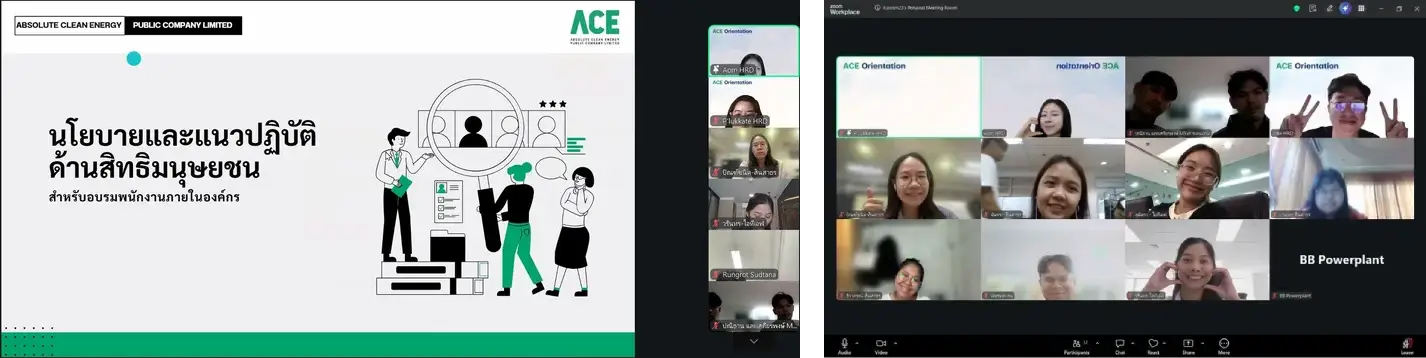
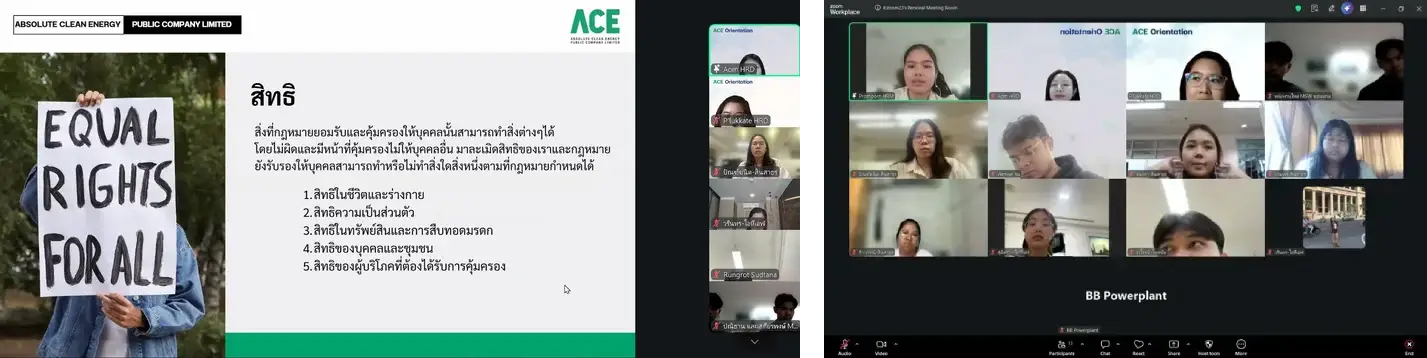
As part of this approach, the Group integrates Employee Orientation and Human Rights Training, which is communicated to all employees across all operations. In 2025, the Group conducted orientation and training covering the Human Rights Policy, including labour-related policies, as well as human rights and labour practices, for both new and existing employees. To ensure effective understanding and consistent application, the Human Rights Policy are made available in both Thai and English. The training raises awareness of appropriate workplace behaviour, including the prevention of bullying and harassment, and informs employees of the Group’s Whistleblowing and Complaint Policy, which provides confidential reporting channels for raising concerns or evidence of violations of laws, regulations, company rules, including bullying, harassment, and business ethics, with protection of complainants’ confidentiality. This training supports responsible conduct and helps ensure that daily work practices align with the Group’s human rights principles and labour standards across the organization.
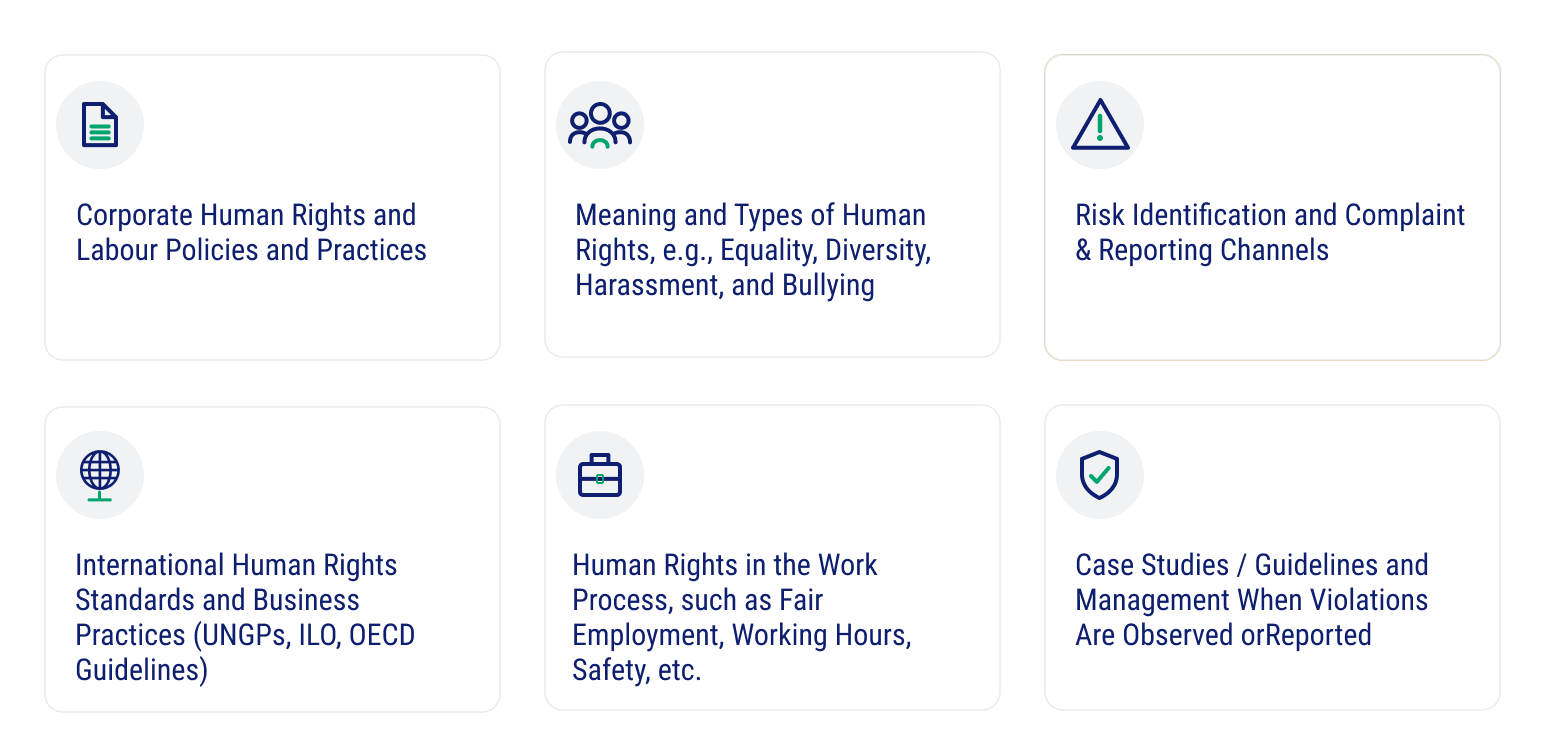
The training covers the following key topics
3.2 Employee Competency and Skill Development
The Group places strong importance on developing employees’ knowledge, abilities, and potential as a foundation for effective operations and long‑term organizational sustainability. Employee personal development is managed under the Human Resource Development and Training Policy, which supports continuous learning from onboarding throughout employment.
In parallel, the Group supports employee career advancement through fair employment processes and conditions that promote equal opportunity and merit‑based progression across all operations. Recruitment, selection, and employment decisions are based on qualifications, knowledge, capabilities, and job requirements, and are conducted without discrimination on the grounds of race, religion, gender, age, sexual orientation, disability, or nationality. The Group provides equal consideration to applicants who meet the required qualifications and competencies, with a focus on merit‑based selection.
These principles are applied through structured processes related to recruitment and hiring, performance evaluation, career development, promotion, and succession planning, in line with the Group’s employment practices and applicable labour laws. By embedding fairness and transparency into career advancement processes, the Group supports non-discrimination and equal access to career development opportunities for employees across all levels.
- Employee Performance Evaluation
The Group has established an employee performance evaluation process to assess individual performance against defined criteria aligned with organizational goals. performance evaluations are conducted regularly and are used to support employee development planning, identify training needs, and inform career advancement and promotion considerations. Evaluation results are applied to ensure that career‑related decisions are based on performance, capabilities, and potential, supporting transparency, consistency, and fairness across the organization.
- Succession Planning
The Group implements succession planning to ensure continuity in key positions and reduce risks related to workforce transitions. The succession planning process focuses on identifying and developing high‑potential employees through targeted development plans, training, and on‑the‑job learning. Succession plans are reviewed and updated regularly to align with organizational strategy and operational requirements, supporting long‑term workforce sustainability and clear career pathways for employees.
3.3 Employee Well‑Being and Quality of Life
The Group places importance on promoting employee well‑being and quality of life by providing appropriate benefits, fair compensation, and effective management of working hours in compliance with labour protection laws. The Group’s approach to employee well‑being is applied across all operations and is designed to create a supportive working environment that balances operational requirements with employees’ personal needs.
- Employee Benefits
The Group provides employee benefits in accordance with legal requirements and offers additional welfare beyond regulatory requirements. These benefits include social security and other legally required entitlements, as well as supplementary benefits such as insurance, provident fund contributions, financial assistance in various circumstances, and annual health check-ups. Employee benefits are communicated clearly to ensure that employees understand their entitlements and are able to access appropriate support, contributing to job satisfaction and quality of life across the workforce.
- Fair Compensation
In accordance with the Human Rights Policy, the Group implements fair and non‑discriminatory compensation practices to support employees’ income security and quality of life in accordance with the principle of equal pay for equal work. The Group strictly complies with relevant labour laws, and all employees receive fair wages and benefits as legally required, including minimum wage, social security, and other statutory benefits, ensuring income security and a decent quality of life. Employee compensation is regularly reviewed and benchmarked against industry standards to maintain competitiveness and internal fairness. Wages are also determined in alignment with local economic conditions and cost of living, ensuring that employees receive sufficient income to meet their basic living needs and those of their families. Compensation structures also consider individual skills, experience, and responsibilities, with wages set to exceed the minimum wage to reflect each employee's contribution and potential, while internal fairness principles applied to reduce unjustified pay gaps.
- Management of Employee Working Hours
The Group manages employee working hours in compliance with labour laws to protect employees’ health, safety, and well-being. Standard working hours are defined, and overtime work is permitted only when necessary, subject to employee consent, and within legal limits. Overtime compensation is provided in accordance with legal requirements. In addition to complying with labour laws, the Group seeks to prevent and reduce excessive working hours by applying overtime approval controls, using time‑attendance and monitoring systems, and regularly reviewing working‑hour reports. Where appropriate, flexible working arrangements and adequate rest periods are supported. Employees are also encouraged to use their leave entitlements and maintain a healthy work‑life balance.
The Group has also established clear guidelines for managing working hours as follows: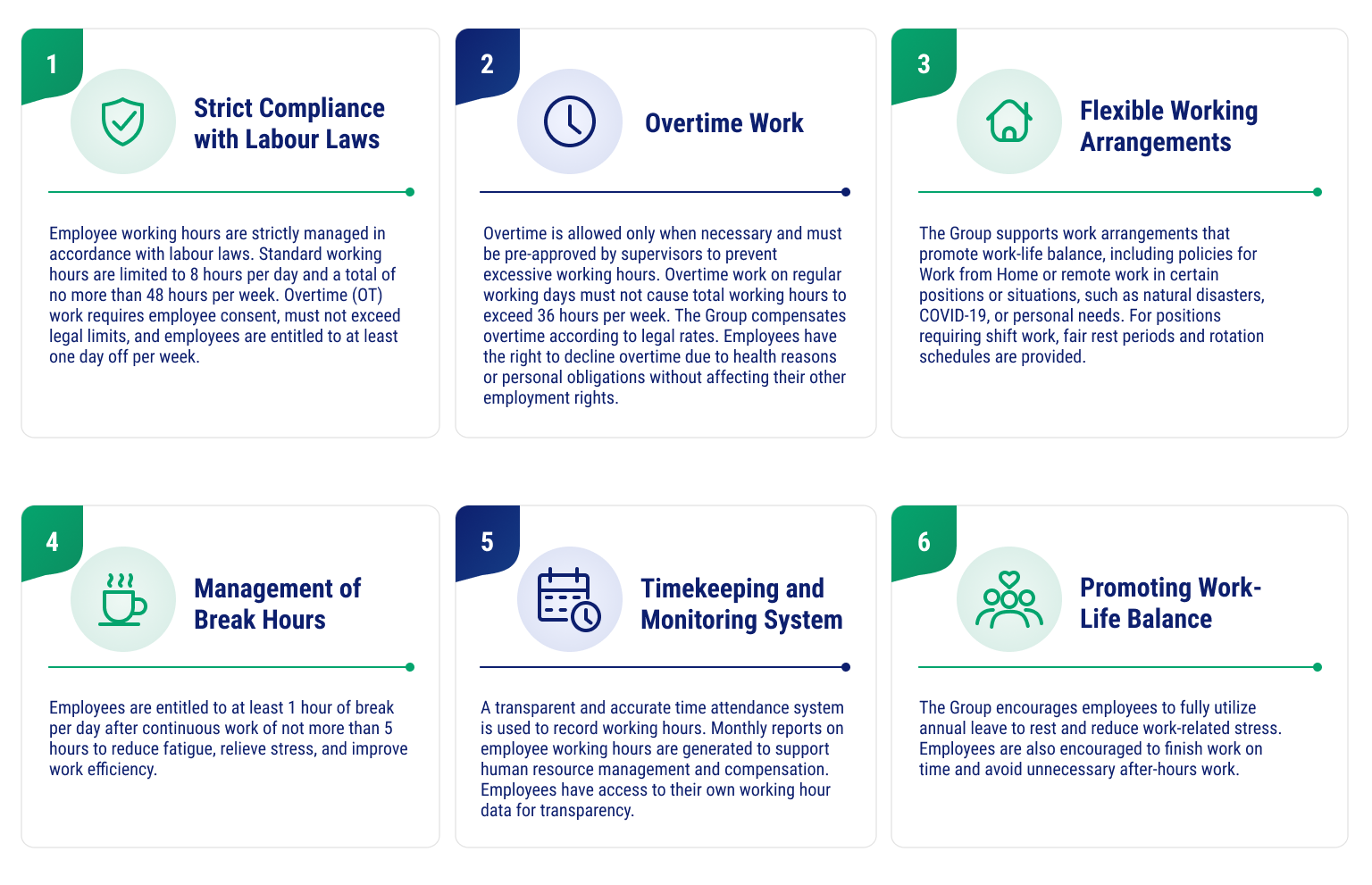
3.4 Work Environment and Safety
The Group prioritizes a safe and healthy workplace by strictly following legal standards and implementing systematic management of occupational health and environmental risks. Our approach focuses on preventing accidents through clear safety manuals, providing necessary protective gear, and conducting regular performance reviews. By continuously improving our practices, we ensure a high-quality environment that protects employee well-being and long-term quality of life.
3.5 Employee Engagement and Relationship Building
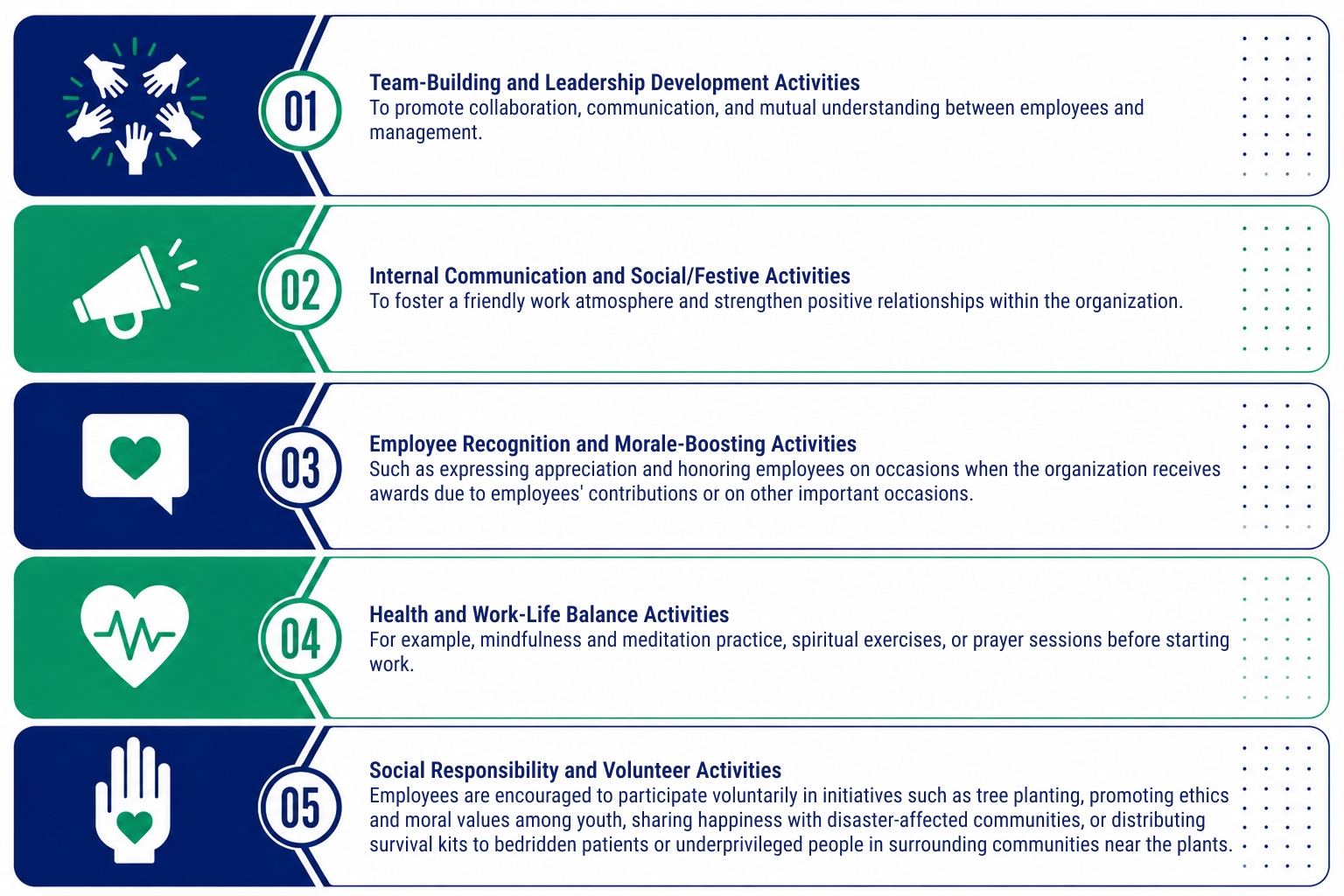
The Group promotes employee engagement and positive working relationships by implementing a range of structured activities that support communication, collaboration, well‑being, and a sense of belonging among employees. These activities include team‑building and leadership development activities, internal communication and social or festive activities, employee recognition and morale‑boosting initiatives, health and work‑life balance activities, as well as social responsibility and volunteer activities. Together, these activities are designed to foster a friendly and supportive working atmosphere, strengthen interaction between employees and management, and encourage employee participation across different aspects of organizational life.
4. Projects
The Group has implemented a number of labour-related projects and initiatives that translate labour policies into practical actions across its operations.
4.1 Employee Training and Workforce Development Programs
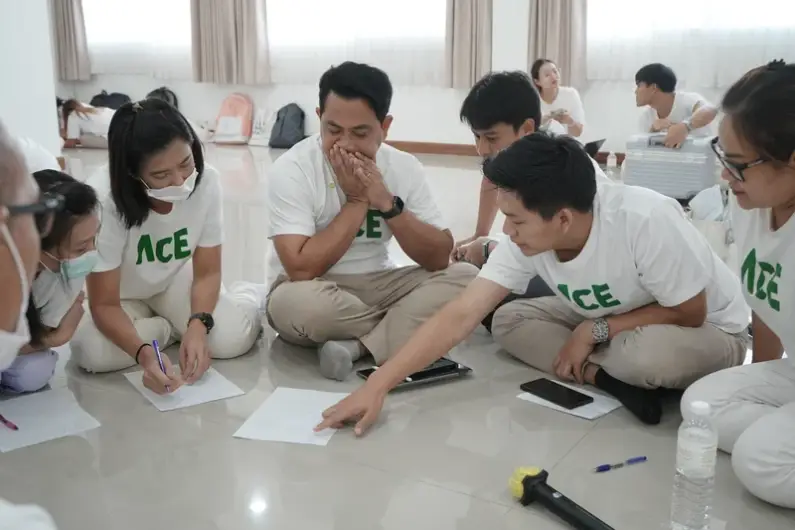
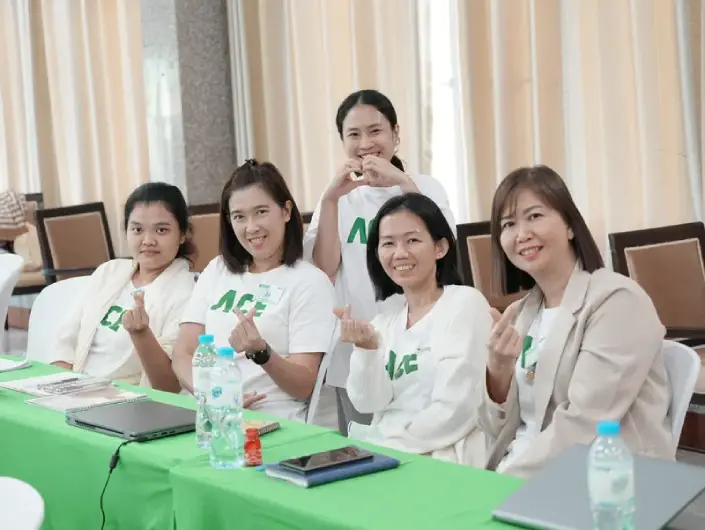
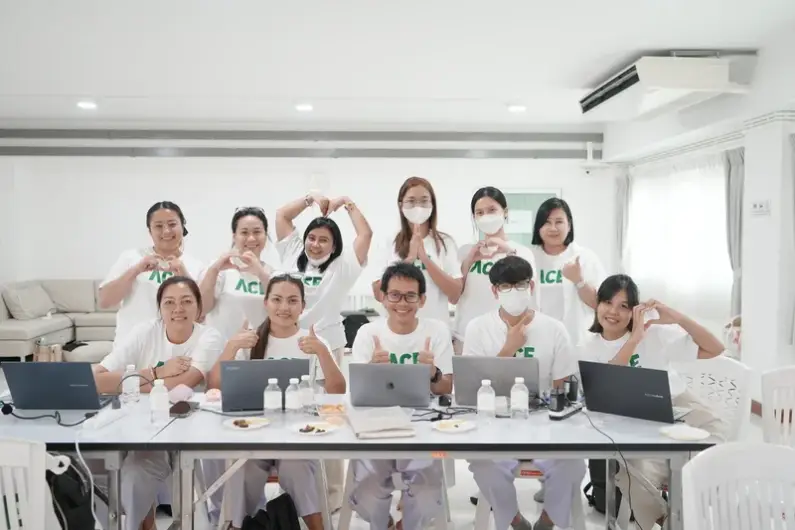
The Group implements employee personal development and learning programs under the Employee Competency and Skill Development mechanism to enhance individual skills, knowledge, and capabilities across all employee levels. These initiatives include new employee orientation, on‑the‑job training, internal and external training programs, and E‑Learning platforms, covering professional skills, leadership, ESG knowledge, human rights, business ethics, occupational health and safety, data protection, and whistleblowing channels. In addition, the Group promotes ethical development, mindfulness, and positive attitudes through activities under the Happy Workplace Program, supporting employees’ personal growth alongside professional development.
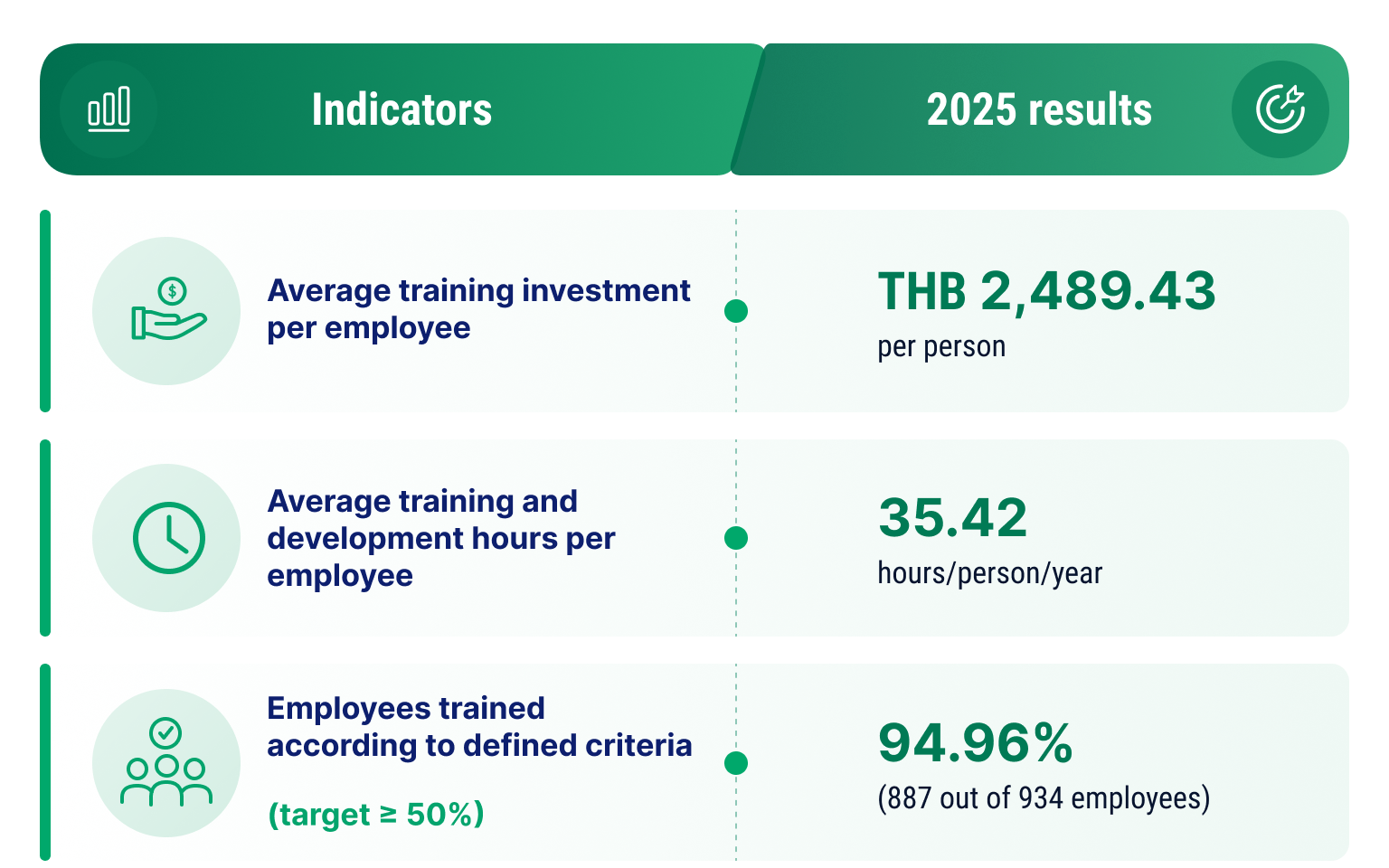
In 2025, the Group’s investment in employee development resulted in an average training investment of THB 2,489.43 per employee, with an average of 35.42 training and development hours per employee per year. A total of 94.96% of employees (887 out of 934 employees) were trained in accordance with defined criteria, exceeding the Group’s internal target. These results reflect the Group’s commitment to providing continuous personal development opportunities and strengthening employee capabilities in a systematic and inclusive manner.
4.2 Programs to Promote Employment for under-previleged groups and Internship Opportunities for Youth
The Group supports youth employment by providing internship and employment opportunities for students and fresh graduates, particularly in the clean energy sector. Through academic collaborations and Memoranda of Understanding (MOUs) with educational institutions, the Group offers internships and hands‑on experience at operational sites to develop practical skills aligned with labour market needs. Employment opportunities are also made available across various functions, with job postings clearly welcoming fresh graduates.
In addition, the Group supports employment opportunities for vulnerable and disadvantaged groups with limited access to the labour market, such as fresh graduates, the elderly, and underprivileged individuals, by promoting fair access to employment and suitable job opportunities. These initiatives aim to enhance work readiness, reduce barriers to employment, and promote inclusive access to career opportunities, supporting the development of a quality workforce and reducing inequality in access to employment in the long term.
4.3 Career Promotion and Quality of Life Development Program for Vulnerable Groups
The Group implements the Career Promotion and Quality of Life Development Program for Vulnerable Groups to promote equal access to employment opportunities and improve the quality of life for disadvantaged groups who face limitations in accessing stable work and income. As part of this program, the Group undertakes actions to support income generation and self‑reliance through employment and skill‑development initiatives aligned with individual capabilities and life contexts.
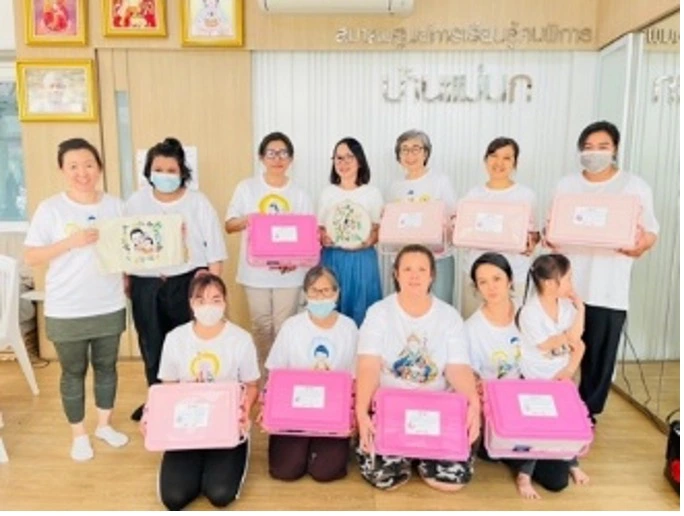
In 2025, the Group implemented the employment of persons with disabilities under the “Section 35 Hand Embroidery Program.” Through this initiative, the Group supports caregivers of persons with disabilities by providing training in hand-embroidery techniques. This program aims to enhance vocational skills for caregivers, create supplementary income opportunities, and improve their overall quality of life.
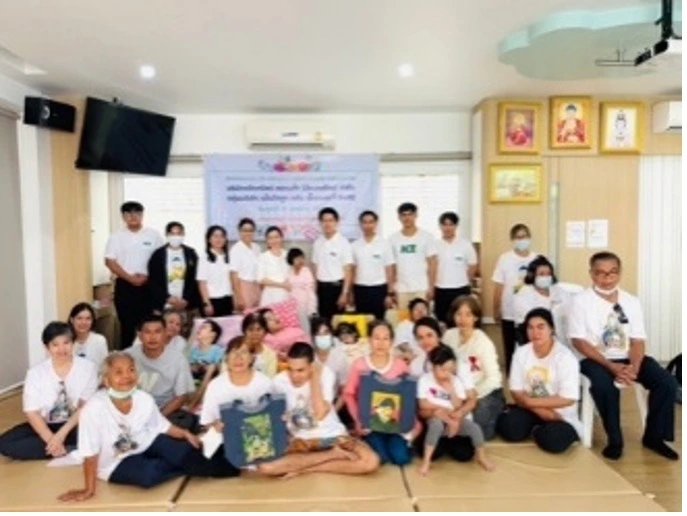
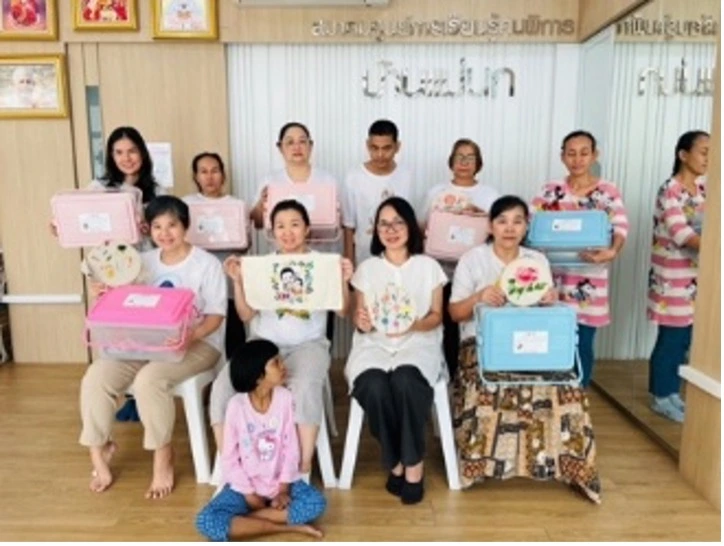
Additionally, in line with this approach, the Group implements the Employment of Persons with Disabilities from Local Communities program as an action to promote workforce diversity, equal opportunities, and non‑discrimination based on disability. The Group has employed a total of 4 people with disabilities in positions aligned with their individual capabilities.
4.4 Participation in Workshops and External Collaborations
The Group participates in workshops, campaigns, and external collaborations organised by government agencies to promote good labour practices, workplace safety, and responsible business operations. In 2025, the Group participated in the “Safety Culture Together in the Workplace” campaign, part of a national Safety Campaign led by the Department of Labour Protection and Welfare, and received a certificate of recognition reflecting its commitment to fostering a sustainable safety culture. The Group also participated in workshops on workplace drug prevention and mitigation, organised by the Department of Labour Protection and Welfare, to support awareness, prevention, and implementation of workplace drug prevention standards. In addition, the Group joined the Good Labour Practices (GLP) Capacity‑Building Conference (2nd edition) and other capacity‑building training programmes organised by provincial and national authorities to exchange knowledge, strengthen ethical labour management, and enhance compliance with labour laws and human rights principles.
5. Relevent documents