
1. Importance
Pollution control and responsible resource use are key considerations for sustainable power generation, particularly in the clean energy sector where operations involve fuel combustion, material inputs, water use, and long‑term interactions with surrounding communities and the environment. Power generation activities may generate air emissions, waste, and resource consumption that could affect air quality, natural resources, and community well‑being if not effectively managed. By integrating pollution prevention and resource efficiency considerations into environmental management systems, operational controls, and monitoring processes, the Group supports environmental protection, operational efficiency, and long‑term sustainable growth across its power generation activities.
2. Targets and Performance
To demonstrate its commitment to effective pollution control, waste management, and responsible resource use, the Group has established clear goals and systematically monitors performance against these material topics, as outlined below:
| Goal | 2025 Performance |
|---|---|
| Pollutants | |
| Biomass Power Plants
Reduce the amount of emissions from the stack to be better than the applicable regulatory limit values, with a target to reduce emissions as follows:
|
The Group’s biomass power plants implemented emission control measures through appropriate fuel selection, regular maintenance of air pollution control systems, and employee training to enhance combustion efficiency. Continuous Emission Monitoring Systems (CEMS) were used to monitor key pollutants in real time, and all emission levels complied with established targets and regulatory standards. In 2025, SO₂ emissions were reduced by 98% below the regulatory limit, while TSP emissions were reduced by 67% below the regulatory limit. NO₂ emissions were also controlled at 30% below the regulatory limit. |
| MSW Power Plants
Reduce the amount of emissions from the stack to be better than the applicable regulatory limit values, with a target to reduce emissions as follows:
|
The Group’s MSW power plants continuously applied emission control measures to ensure compliance with regulatory standards and established targets. These included effective combustion control, maintenance of air pollution control systems, employee training, and real‑time monitoring of emissions through Continuous Emission Monitoring Systems (CEMS), with all emissions remaining within target limits. In 2025, SO₂ emissions from the MSW power plant were reduced by 80% below the regulatory limit. TSP emissions were reduced by 54%, while NO₂ emissions were reduced by 53% below the regulatory limits. |
| Natural Gas Power Plants
Reduce the amount of emissions from the stack to be better than the applicable regulatory limit values, with a target to reduce emissions as follows:
|
Stack emissions from natural gas power plants were controlled in compliance with applicable environmental standards. In 2025, SO₂ emissions were reduced by 98% below the regulatory limit. TSP emissions were reduced by 78.5%, while NO₂ emissions were reduced by 55.83% below the regulatory limits. |
| Waste | |
General waste/non-hazardous waste
|
In 2025, the Group continued to promote general waste reduction through resource conservation campaigns across offices and operational units. Measures included reducing paper use through paperless ISO documentation, double‑sided printing, minimizing color printing, using refill packaging, and eliminating small chemical containers and obsolete equipment. The Group also applied circular economy practices by repairing equipment prior to disposal, converting waste into energy through waste‑to‑energy and refuse‑derived fuel (RDF) initiatives, and optimizing combustion processes to reduce unburned ash. Generated ash was further processed into soil improvement materials, while ash water was tested and confirmed as non‑hazardous and utilized for land improvement at a former municipal landfill, in line with approved landfill mining and land reclamation principles. In 2025, the Group continued implementing waste reduction and circular economy initiatives, with over 70% of administrative processes conducted paperlessly and paper consumption reduced by more than 90% at certain operational units. |
Hazardous waste
|
Hazardous waste management in 2025 focused on waste minimization and proper handling through planned preventive maintenance to reduce unnecessary repairs and the consumption of materials associated with repetitive maintenance activities, such as cloth gloves and maintenance waste. The Group enhanced communication and training for employees on waste segregation, management, and reuse practices, with continuous engagement going forward to improve hazardous waste management performance. |
| Resources | |
| Enhance production efficiency through digitalisation and automation by integrating internal power plant systems with computer equipment and Internet of Things (IoT) solutions, with the aim of improving real-time operational control and data-driven management and reducing fuel consumption per unit of electricity generated by 2-5% by 2030. | The Group continued to implement IoT solutions across its operations, including SCADA systems for real-time monitoring of plant equipment and dashboard platforms for tracking and analyzing operational performance over time. These initiatives support data-driven decision-making and improve overall operational efficiency. |
3. Management Approach
The Group manages pollution, waste, and resource use through an environmental management framework integrated into power generation operations. This framework focuses on preventing and controlling environmental impacts arising from fuel combustion, waste generation, and resource consumption, while ensuring compliance with applicable environmental requirements. Environmental management is embedded in operational planning, monitoring, and continuous improvement processes and is supported by internationally recognised management systems to ensure consistent implementation across all power plants.
3.1 Environmental Policy and Environmental Management System
The Group’s approach to managing environmental impacts is guided by its Environmental Policy and implemented through the Environmental Management System in accordance with ISO 14001. This system provides a structured framework for identifying environmental aspects, managing risks, ensuring regulatory compliance, and driving continuous improvement across all power generation operations.
Pollution
Under the Environmental Policy, the Group recognizes that power generation activities may cause environmental impacts, particularly on air quality, if not effectively managed. Through the ISO 14001 Environmental Management System, pollution are controlled at the operational level.
To reduce and avoid pollution impacts, the Environmental Management System requires the establishment of control measures and performance targets beyond regulatory requirements. These include emission control practices, monitoring systems, and continuous improvement mechanisms designed to reduce stack emissions and improve environmental performance in accordance with the Group’s commitments.
Waste
The Group acknowledges that electricity generation activities generate general (non‑hazardous) and hazardous waste, which require systematic management to prevent environmental impacts. Waste management is therefore addressed under the Environmental Policy and managed through the ISO 14001 system as a material environmental aspect across projects.
To reduce waste and improve waste management efficiency, the Group is committed to reducing general waste, non‑hazardous waste, and hazardous waste generated from its projects. This commitment is implemented through waste reduction practices, improved waste segregation, and reuse and recovery measures embedded in the Environmental Management System.
Resource Use
The Group also recognizes the importance of efficient and responsible natural resource management. Although solar power generation does not involve direct fuel consumption, the Environmental Policy requires continued attention to resource management at all power plants to address environmental impacts related to energy use, water use, and material consumption.
To improve resource efficiency, the Group is committed to reducing electricity and energy usage, reducing the use of water resources, and minimizing the use of resources or raw materials in production and services.
3.2 Air Pollution Control and Emission Monitoring
The Group recognizes that air pollution may arise from electricity generation processes involving fuel combustion. Air pollution risks are managed through the Integrated Management System (IMS) in accordance with ISO 14001, with controls designed to prevent and reduce emissions at source.
To reduce air pollution impacts, the Group has established short-term and long-term emission targets beyond regulatory requirements for biomass power plants, MSW power plants, and natural gas power plant. These targets are supported by emission control measures, appropriate fuel selection, regular maintenance of air pollution control systems, and employee training to enhance combustion efficiency.
Continuous Emission Monitoring Systems (CEMS) are installed at power plants to monitor key pollutants in real time, supporting regulatory compliance, transparency, and continuous performance improvement.
3.3 Waste Management Based on the Waste Hierarchy
The Group recognizes that electricity generation activities generate both non‑hazardous and hazardous waste, which may result in environmental impacts if not properly managed. To reduce waste generation and improve waste management efficiency, the Group applies the Waste Hierarchy principle, prioritizing waste avoidance and reduction at source, followed by reuse, recycling, recovery, and proper disposal. In line with this approach, the Group is committed to reducing general, non‑hazardous, and hazardous waste generated from its projects through defined targets, circular economy practices, and continuous employee engagement embedded within the management system.
A summary of the types of waste generated and their respective management approaches is provided below.
| Power Plants | Significant Types of Waste Generated | Management Approach |
|---|---|---|
| Non-hazardous Waste (General Waste) | ||
| Biomass, MSW, Natural Gas, Solar |
|
|
| Non-hazardous Waste (Combustion Residues) | ||
| Biomass, MSW |
|
|
| Non-hazardous Waste (Sludge) | ||
| Biomass, MSW | Sludge from wastewater treatment systems | Collect and transfer to licensed entities for proper disposal in compliance with regulatory requirements |
| Natural Gas | Sludge from water clarification | Collect and transfer to licensed entities for proper disposal in compliance with regulatory requirements |
| Hazardous Waste | ||
| Biomass, MSW, Natural Gas, Solar |
|
|
3.4 Communication, Training, and Employee Engagement
The Group recognizes that effective communication, training, and employee engagement are essential to the successful implementation of pollution control, waste management, and resource efficiency measures under the Environmental Policy and Environmental Management System (ISO 14001).
To support pollution prevention, waste reduction, and efficient resource use, the Group provides environmental management training and awareness‑raising activities for employees at all levels. These cover topics such as air emission control practices, waste segregation and handling procedures, energy and water conservation, and environmental responsibilities in accordance with ISO 14001 requirements. Environmental communication is carried out through internal training programs, operational briefings, awareness campaigns, and ongoing engagement activities to promote compliance with environmental procedures and encourage responsible operational behavior. These communication and training mechanisms support consistent application of environmental controls, strengthen employee participation, and contribute to continuous improvement in environmental performance across the Group’s power plants.
4. Projects
4.1 BCG Model Community-Based Biomass Ash Utilisation Project
The Group has implemented a community‑based project in line with the Bio‑Circular‑Green (BCG) Economy Model to promote the beneficial use of biomass ash generated from electricity production. Under the Bio Economy and Circular Economy concepts, biomass ash that has been analysed and confirmed as non‑hazardous is utilised as a soil improvement material to enhance soil quality and reduce waste requiring disposal. In practice, the Group collaborated with the community group “New Way Organic Agriculture, Ban Ko Moo” in Kamphaeng Phet Province to implement the project “Organic Fertilizer for Soil Improvement from Biomass Ash.” The initiative combines biomass ash with agricultural residues to produce organic fertilizer that helps reduce soil acidity, improve fertility, and lower the use of chemical fertilizers. This approach supports farmers in reducing cultivation costs while promoting health and sustainability. The produced organic fertilizer is distributed to group members and extended as a model for surrounding farmers, who may request biomass ash for use in soil improvement free of charge, in accordance with the Group’s waste management approach under the Waste Hierarchy.
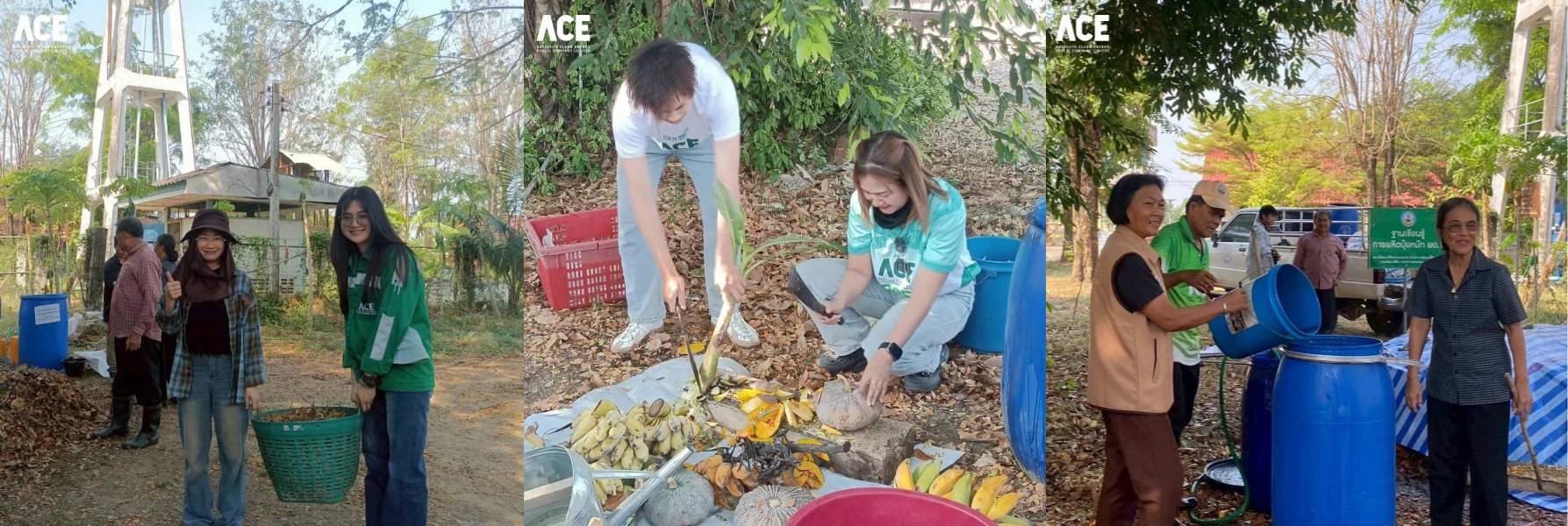
Project: New Way Organic Agriculture, Ban Ko Moo

Project: Organic Fertilizer for Soil Improvement from Biomass Ash