
1. Importance
Biodiversity is a key consideration for responsible power generation, particularly in the clean energy sector where projects and operations involve long‑term interactions with land, water resources, ecosystems, and surrounding communities. Power generation activities may affect terrestrial and aquatic habitats and the ecosystem services that support environmental stability and community livelihoods. By integrating biodiversity considerations into policies, environmental impact assessment processes, and ecosystem management practices, the Group supports ecological balance and contributes to long‑term sustainable growth across the power value chain.
2. Target and Performance
To demonstrate its commitment to Biodiversity, the Group has established clear goals and systematically monitors performance against these material topics, as outlined below:
| Goal | Performance |
|---|---|
| Establish a clear policy framework for biodiversity management | A Biodiversity Policy has been established and integrated into the Power Plant Integrated Management System, serving as a framework for conserving and maintaining ecological balance across operational areas. |
| Avoid deforestation and reduce biodiversity loss related to raw material sourcing | The Group avoids the use of restricted timber and applies responsible sourcing principles for biomass fuel to reduce risks associated with deforestation and biodiversity loss. |
| Identify and manage biodiversity impacts and ecological risks from operations | Biodiversity impacts and ecological integrity are assessed and monitored in accordance with Environmental Impact Assessment (EIA) reports, or Environmental Safety Assessment (ESA) reports for each project. |
| Protect ecosystems and biodiversity and minimize negative impacts from the Group’s operations | The Group integrates biodiversity protection into clean energy power plant operations and implements measures to minimize environmental impacts in areas within and surrounding its operational sites. |
| Preserve biodiversity through efficient use of natural resources | The Group emphasizes efficient use of natural resources, including water, soil, and biomass fuel, to preserve biodiversity and maintain ecosystem balance. |
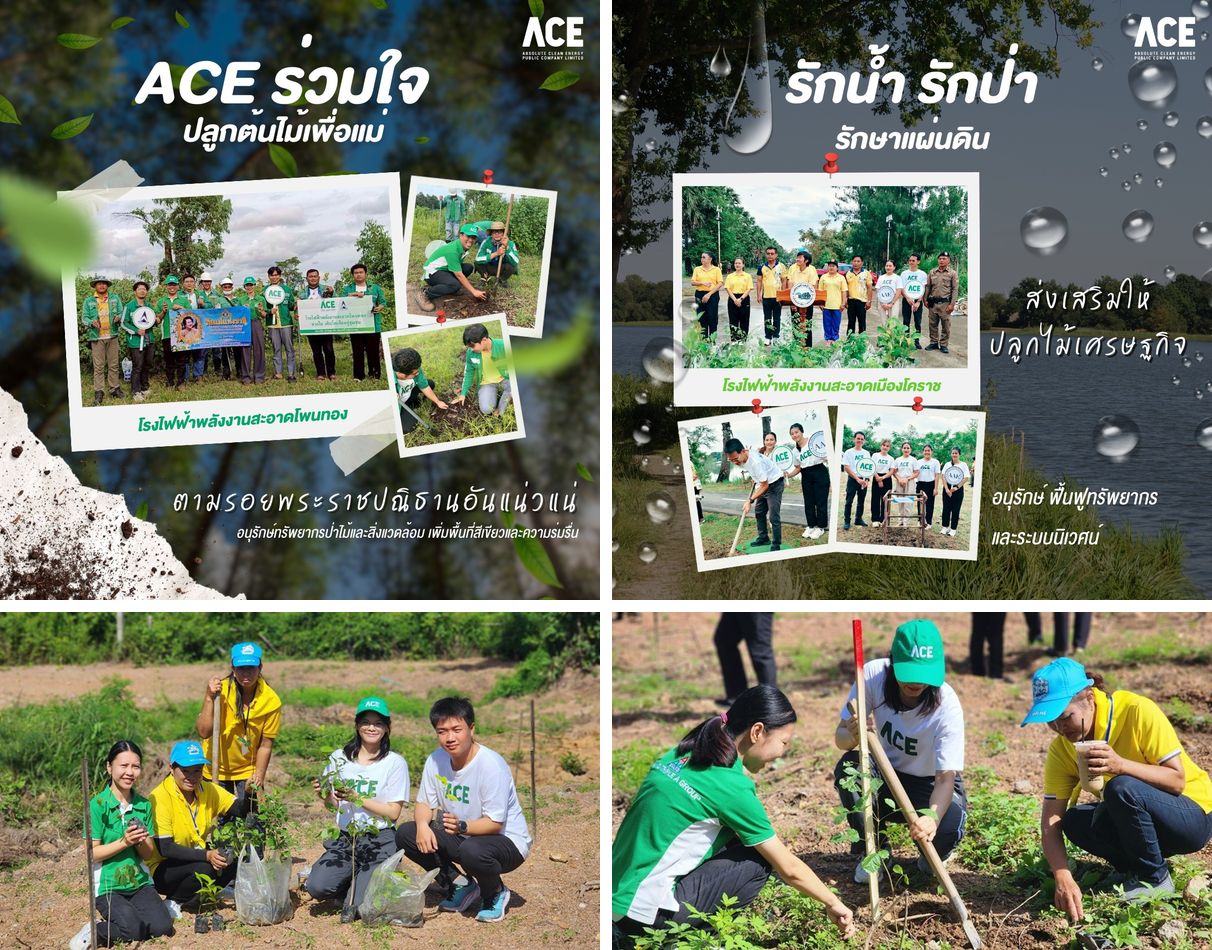
| Restore degraded ecosystems and enhance green areas | Ecosystem restoration activities have been implemented through corporate social responsibility initiatives, including reforestation, wetland restoration, and the expansion of green areas within and around project sites. |
3. Management Approach
The Group manages biodiversity through an approach that integrates policy commitment, biodiversity risk assessment, ecosystem-specific impact management, and collaboration with stakeholders. The management approach focuses on preventing and mitigating impacts from operations, conserving and restoring terrestrial and aquatic ecosystems, and enhancing biodiversity in areas within and surrounding power plant locations.
3.1 Biodiversity Policy
The Group recognizes that biodiversity within and surrounding its power plant locations is essential to maintaining ecosystem balance and supporting sustainable operations. Accordingly, the Group is committed to protecting ecosystems and biodiversity, minimizing negative impacts from its operations, and conducting business in a responsible and sustainable manner. To formalize this commitment, the Group has established a Biodiversity Policy, which provides clear direction for avoiding and minimizing negative impacts from power plant operations while promoting the responsible use of natural resources. In accordance with this policy, the Group avoids conducting business in areas of biodiversity significance, such as World Heritage Sites, internationally significant wetlands, Man and the Biosphere (MAB) Program areas, and Biosphere Reserves designated by UNESCO, and conservation areas designated by IUCN. In cases where operations are necessary in biodiversity‑sensitive areas, appropriate measures for biodiversity restoration and offsetting are implemented.
3.2 Biodiversity Risk Assessment and Monitoring
The Group manages biodiversity risks through a biodiversity risk assessment process that is integrated into the Environmental Impact Assessment (EIA) for its projects. Through the EIA process, the Group identifies and evaluates potential impacts on terrestrial and aquatic ecosystems within and surrounding power plant locations, taking into account site‑specific environmental conditions and ecological sensitivity.
For potential new power plant operations, biodiversity risk screening using tools such as Encore has been conducted for new projects to support due diligence, for 2025 the assessment covering five solar power projects (ACP1–ACP4 and BPP) and enabling the classification of biodiversity depletion into five levels (from highest risk hotspots to lowest depletion). The assessment identified that most projects are located in areas with low to moderate risk (e.g., ACP1 and ACP2), while ACP3 is situated in a high‑risk hotspot area (top 20% of biodiversity depletion), and ACP4 and BPP are in areas of relatively higher depletion.
For existing power plant operations, biodiversity monitoring conducted under the EIA outline including ecological surveys and impact monitoring at relevant sites, is considered part of the Group’s Biodiversity Action Plan (BAP)-related practices. The implementation of these measures and monitoring results are subject to review and verification by relevant authorities on a regular basis, including biannual reporting in accordance with regulatory requirements. Biodiversity risks and mitigation measures are monitored as detailed in the below table.
| Asset Name | Biodiversity Risks | Environmental Prevention and Mitigation Measures | Details of Implementation |
|---|---|---|---|
| Koh Khanun Clean Energy Powerplant (AAA) | The project is located in an area primarily used for residential and agricultural purposes, with no forest resources or rare/endangered wildlife identified. However, Water abstraction from the canal presents a risk of entrainment and impingement of aquatic organisms, including fish (particularly juveniles), plankton, and benthic species. Small-sized organisms (e.g. juvenile Cypriniformes ~6.9 mm and below) are particularly vulnerable. Changes in flow regime and water withdrawal may also alter aquatic habitat conditions downstream, potentially affecting species composition and ecological balance. | Install intake screens or grates at the water intake points where water is drawn into the project, with a mesh size equal to or smaller than 16 openings per inch, in order to prevent aquatic organisms with a body size larger than 4.4 millimeters from entering the water intake system to prevent aquatic organisms from entering the system. | The project has installed intake screens or grates with a mesh size finer than 16 openings per inch at the water intake points where water is abstracted for project use, to prevent aquatic organisms larger than 4.4 millimeters from being drawn into the intake system. The installation was completed in 2016, and the intake screens are regularly inspected and subject to annual maintenance plans. |
| Project activities, including water intake (Water is abstracted from the canal during the high-flow season (August to October), with abstraction limited to 1,740,000 m³/year in accordance with EIA requirements), with water demand for plant operations not exceeding 3,413.95 m³/day), may affect aquatic biological resources downstream, particularly plankton, benthic organisms, and aquatic fauna. | Conduct surveys of biodiversity indices for phytoplankton, zooplankton, benthic organisms, and aquatic fauna. In addition, the project regularly conducts annual fish release activities to support aquatic biodiversity conservation and ecosystem enhancement. |
|
|
| Khlong Khlung Hybrid Power Plant (BPP) | The project is located in an agricultural area with no forest or sensitive habitats identified. Key risks include disturbance to common terrestrial species during construction, and impacts on aquatic ecosystems due to increased suspended solids, organic matter, and wastewater discharge (e.g. ~22.4 m³/day), which may affect plankton and benthic organisms. Wastewater from construction and operations may also alter water quality in nearby water bodies if discharged without treatment. | Conduct surveys of biodiversity indices for phytoplankton, zooplankton and benthic organisms. | A total of three monitoring stations have been designated to conduct samplings for phytoplankton, zooplankton, benthic organisms, and aquatic fauna. |
Reference: EIA Monitoring Report of Advance Agro Asia Co., Ltd. (AAA) and EIA Monitoring Report of Khlong Khlung Hybrid Power Plant (BPP) for full details (https://eia.onep.go.th/eia/detail?id=6821 and https://eia.onep.go.th/eia/detail?id=12657)
The Group conducts regular biodiversity monitoring at relevant sites, including the Koh Khanun Clean Energy Power Plant (AAA) and Khlong Khlung Hybrid Power Plant (BPP), in alignment with annual EIA requirements.
For AAA, biodiversity monitoring was undertaken on 11 – 12 October 2025, focusing on aquatic biological characteristics across six sampling locations. Key results are summarized below:
- Phytoplankton: Cyanophyta, Chlorophyta, and Chromophyta were identified. Abundance ranged from approximately 3,040,000 to 3,680,000 units/m³, with 12–15 species recorded and diversity index values of 2.35 to 2.57, indicating conditions suitable for aquatic life.
- Zooplankton: Arthropoda, Protozoa and Rotifera were found. Abundance ranged from 32,000 to 64,000 units per cubic meter, with 4 – 5 species and diversity index values of 1.28 to 1.55. All sites are also considered suitable for aquatic life.
- Benthic organisms: Species from Phylum Mollusca, primarily freshwater snails, were recorded at densities of 75 to 135 individuals/m². Three species were identified, with diversity index values of 1.00 – 1.08, indicating habitats remain capable of supporting aquatic organisms.
- aquatic fauna: Species from class Osteichthyes, were recorded at densities of 167 to 334 individuals/100 m², with 1 – 2 species and diversity index values of 0.00 - 0.69, indicating habitats remain capable of supporting aquatic organisms.
For BPP, aquatic ecology monitoring was conducted on 2 August 2025, focusing on aquatic biological characteristics across three sampling locations representing upstream, project area, and downstream conditions. Key results are summarised below:
- Phytoplankton: Cyanophyta, Chlorophyta, and Chromophyta were identified. Abundance ranged from approximately 3,120,000 to 4,000,000 units/m³, with 12–15 species recorded. Diversity index values ranged from 2.33 to 2.56, indicating that water bodies at all monitoring locations were suitable for supporting aquatic life.
- Zooplankton: Two phyla were recorded. Abundance ranged from 60,000 to 84,000 units/m³, with 6–7 species identified. Diversity index values ranged from 1.62 to 1.91, indicating good ecological conditions suitable for aquatic organisms.
- Benthic organisms: Species from Phylum Mollusca, primarily snails and clams, were recorded at densities of approximately 36–44 individuals/m². Two species were identified, with diversity index values ranging from 0.47 to 0.53, indicating that benthic habitats remained capable of supporting aquatic organisms.
3.3 Aquatic and Biodiversity Management
The Group implements biodiversity protection and ecosystem management measures in areas within and surrounding its power plant operations, covering both aquatic and terrestrial ecosystems. These measures focus on reducing potential impacts on freshwater systems, such as rivers, canals, and community water sources, as well as forest and wetland areas associated with project sites.
Biodiversity management actions include controlling operational activities that may affect water quality, soil conditions, and habitat integrity, in order to minimise disturbance to ecosystems. The Group also undertakes ecosystem restoration and enhancement measures, such as rehabilitation of water bodies, improvement of water flow and retention, re‑vegetation, wetland restoration, and the expansion of green areas. These actions support biodiversity conservation and ecosystem balance, while promoting the responsible use of natural resources through collaboration with surrounding communities.
3.4 Biodiversity Collaboration with Stakeholders
The Group actively engages in biodiversity collaboration with government agencies, local communities, and relevant organizations to support conservation and ecosystem restoration efforts. Collaboration focuses on joint planning, shared responsibility for natural resource management, and participation in biodiversity related activities. This approach enhances the effectiveness of biodiversity management by incorporating local knowledge, strengthening community participation, and fostering collective stewardship of natural resources.
3.5 Responsible Biomass Sourcing through FSC-Certified Supply Chain
As part of its biodiversity management approach, the Group applies responsible sourcing practices for biomass fuel through the systematic application of a biodiversity‑related certification scheme across its supply chain. The Group procures wood residues and wood chips from wood processing facilities that are certified by the Forest Stewardship Council (FSC). FSC is an international, non‑profit organization that establishes standards and provides certification for sustainably managed forests, covering environmental, social, and economic aspects, to ensure that wood and paper products are not sourced from deforestation.
4. Projects
To support the implementation of its biodiversity management approach, the Group has undertaken a range of biodiversity related projects and initiatives focusing on ecosystem conservation, restoration, and enhancement in both terrestrial and aquatic environments. These initiatives are implemented in collaboration with communities, government agencies, and relevant organizations, and are designed to address site specific environmental conditions while promoting sustainable use of natural resources.
4.1 Aquatic Species Release to Enhance Community Water Resources
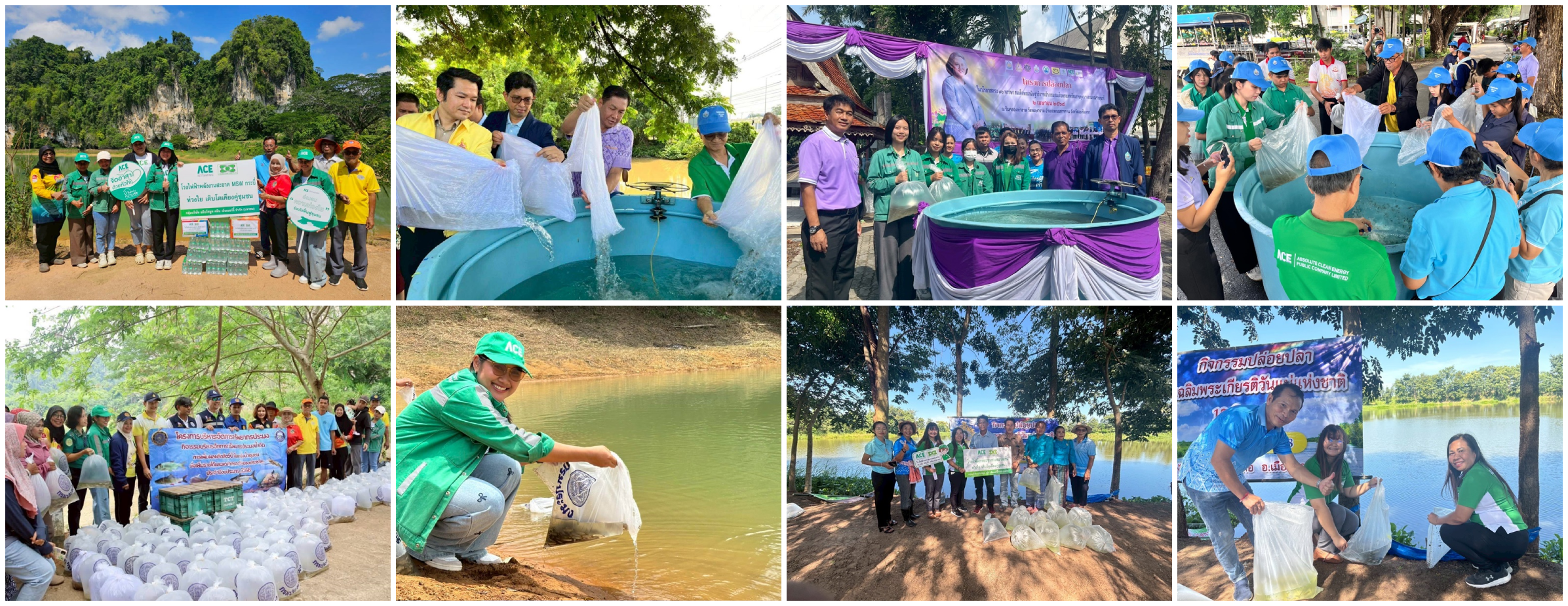
The Group has participated in aquatic species release activities to supports ecosystem restoration in rivers, canals, and community water resources. The initiative involved the release of native aquatic species into natural water bodies to strengthen aquatic habitats, restore ecosystem balance, and enhance the productivity of community water resources. Clean energy power plants under the Group collaborated with local Subdistrict Administrative Organizations, District Fisheries Offices, forestry officers, community leaders, village health volunteers, and local residents to implement this activity. A total of 20,000 fish of various aquatic species, including Mekong giant catfish, Nile tilapia, tinfoil barb, and Java barb, were released into community water sources in Krabi and Chachoengsao Provinces. This initiative contributed to the restoration of aquatic ecosystems, increased biodiversity in local rivers and canals, and supported sustainable food sources for surrounding communities, while also strengthening multi‑stakeholder collaboration in natural resource conservation.
4.2 Conservation and Development of Rivers, Canals and Waterways
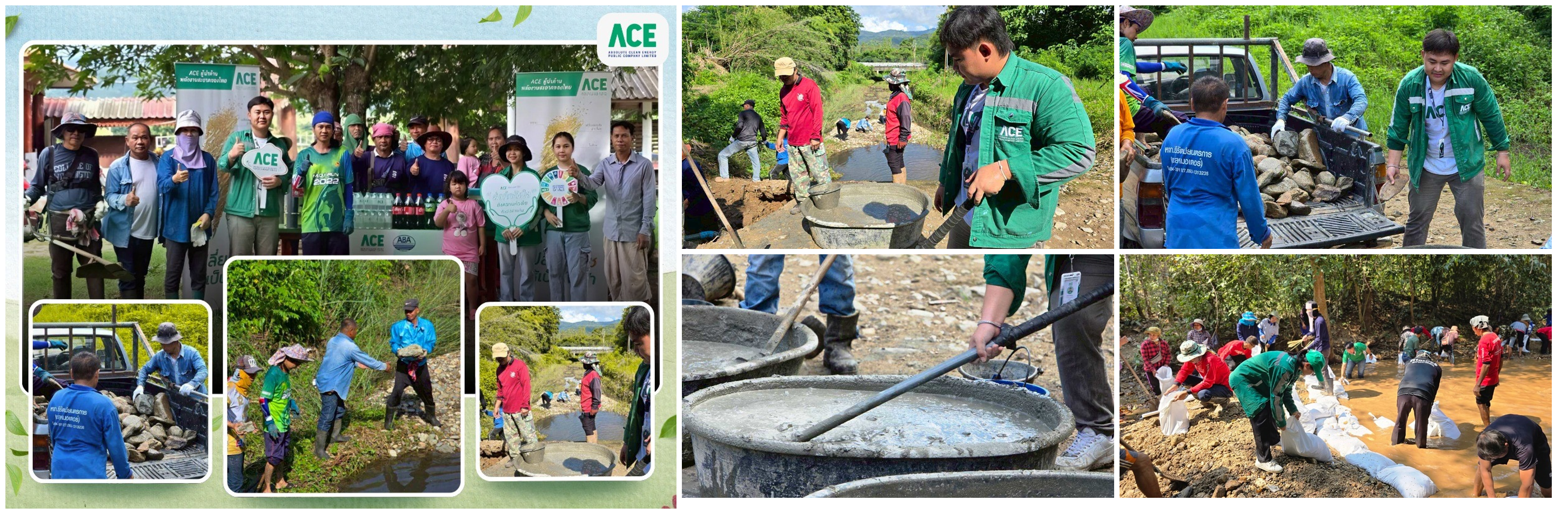
The Group implemented activities to enhance biodiversity through the improvement and repair of overflow check dams to help habitat protection and ecosystem restoration in rivers, canals, and surrounding forest ecosystems, supporting long‑term ecological balance. In collaboration with local communities, the Group participated in repairing the overflow check dam at Ban Mae Tia Nok. The initiative aimed to slow water flow, increase water retention, and improve soil moisture in surrounding areas. As a result, the activity supported forest regeneration, improved local ecosystem productivity, and enhanced biodiversity in nearby communities. In addition, the project improved landscape conditions and enabled more efficient community water resource management, promoting sustainable coexistence between communities and natural ecosystems.
4.3 Protecting Biodiversity and Reducing Marine Litter
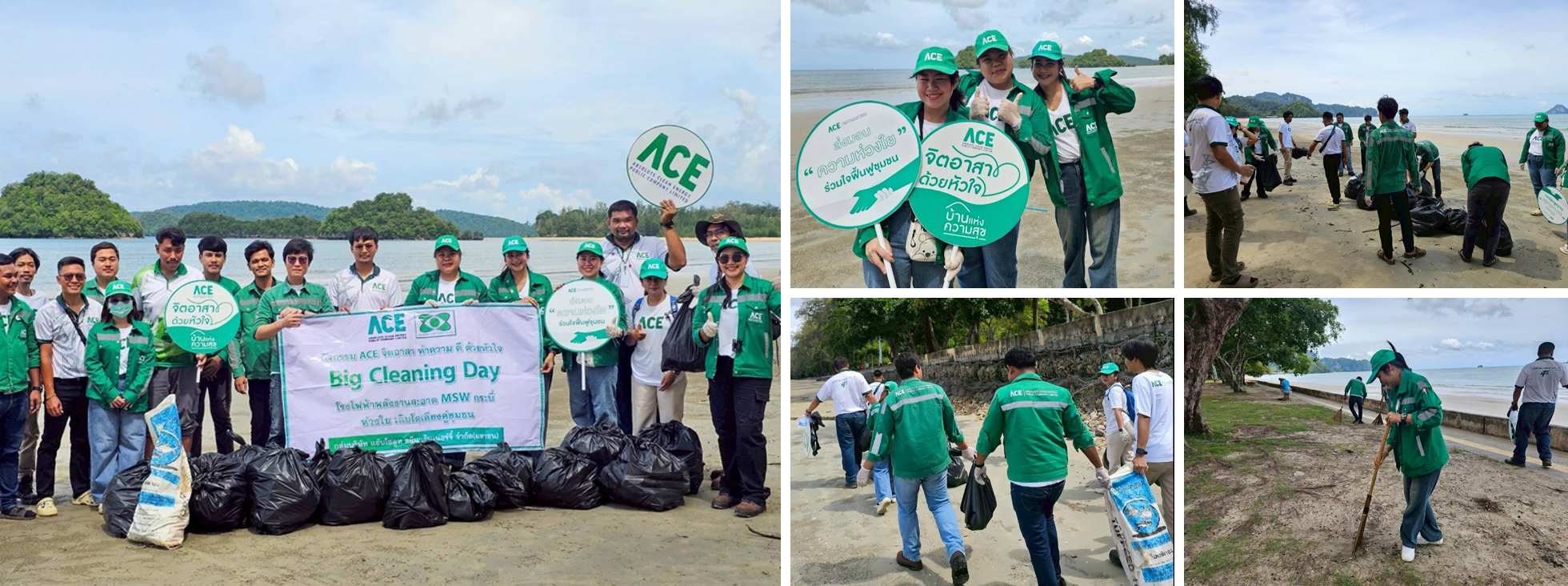
To protect marine ecosystems, the Group organized the activity “ACE Volunteer Spirit: Doing Good with Heart”, focusing on reducing marine litter and restoring coastal environments. The activity was conducted at Noppharat Thara – Phi Phi Islands National Park in Krabi Province. A total of 20 employee volunteers participated in collecting waste along coastal areas to prevent debris from degrading into microplastics and contaminating marine ecosystems. The activity contributed to reducing marine pollution, protecting coastal habitats, and preserving biodiversity in a key natural and tourism area, while also encouraging employee and community participation in marine environmental stewardship.
4.4 Enhancing Biodiversity in Peat Swamp Forests and Blue Carbon Ecosystems
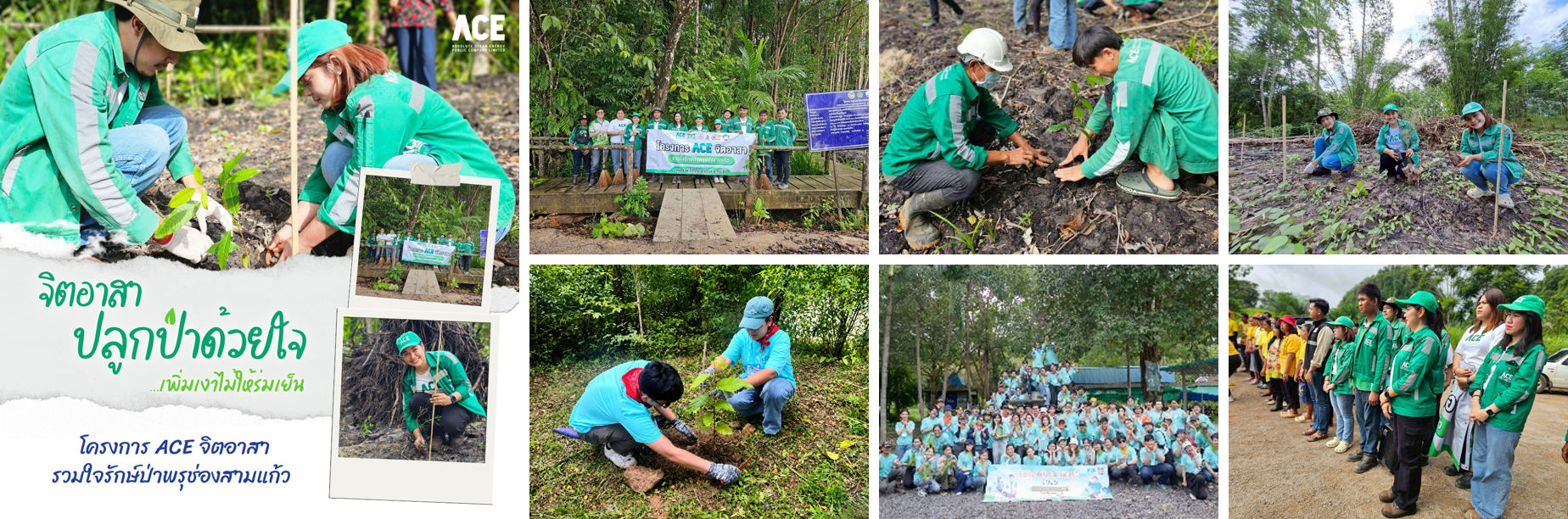
The Group organized the activity “ACE Volunteer Spirit: United for the Conservation of Chong Sam Kaeo Peat Swamp Forest” to ecosystem restoration of a peat swamp forest and wetland ecosystem, enhancing biodiversity and ecological functions. The activity was implemented in Chong Sam Kaeo Peat Swamp Forest, Krabi Province, in collaboration with government agencies, local administrative organizations, and community volunteers. The initiative focused on tree planting, wetland restoration, and landscape improvement to restore ecosystem balance and conserve habitats for local species. A total of 100 trees were planted, alongside volunteer activities to clean and rehabilitate surrounding wetland areas. These actions contributed to restoring freshwater habitats, expanding green areas, and enhancing the ecological functions of blue carbon ecosystems.
4.5 Protecting Biodiversity through Soil Restoration under the BCG Model
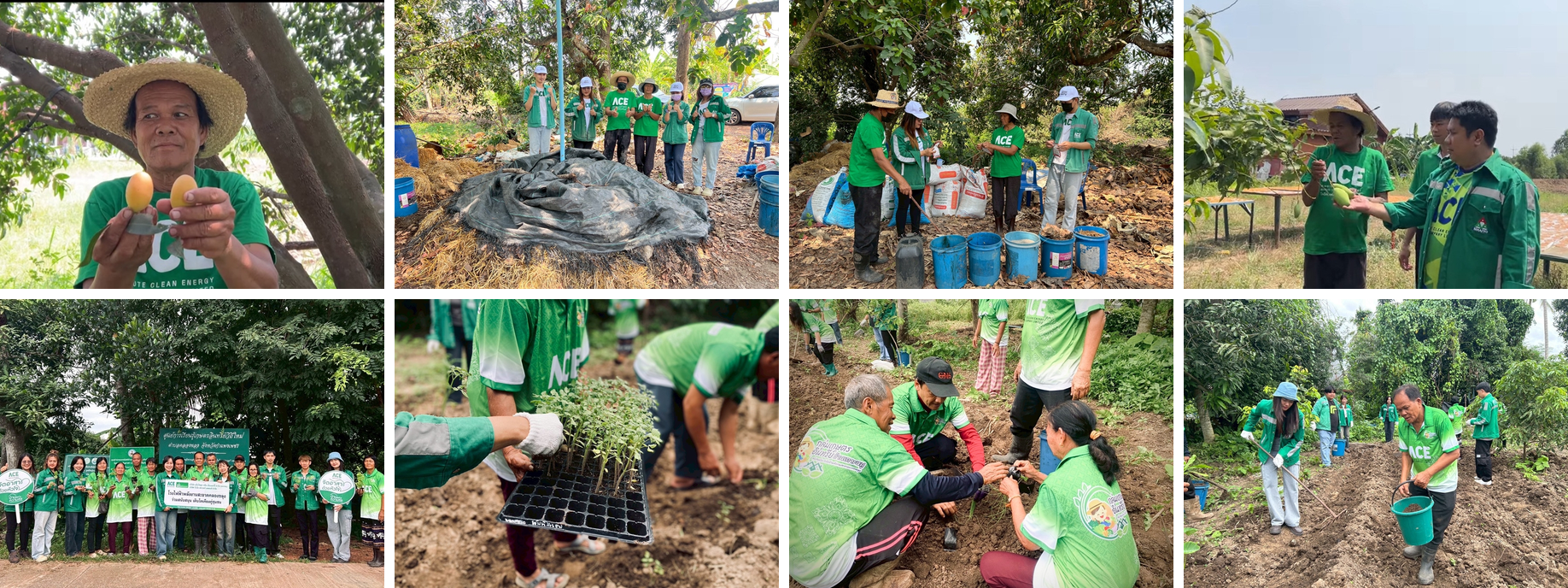
The Group implemented soil restoration initiatives under the BCG Model (Bio Circular Green Economy) to protect biodiversity and improve agricultural land quality. The initiative involved utilizing biomass ash from power generation processes as a soil improvement material. Biomass ash was analyzed to confirm its non hazardous properties and then applied to improve acidic or degraded soils in agricultural areas. This initiative supported soil restoration, enhanced land productivity, and reduced waste through resource reuse. By promoting sustainable agriculture practices, the project contributed to biodiversity conservation while supporting community livelihoods and the circular use of resources.
4.6 Tree Planting in Public and Community Areas
The Group carried out tree planting activities in public and community areas to increase green spaces and restore ecosystems. These activities were implemented as part of community based environmental initiatives and volunteer programs. Tree planting contributed to expanding green areas, restoring habitats for local species, and improving local environmental conditions. In addition to ecological benefits, the activities promoted environmental awareness and community participation in biodiversity conservation, reinforcing shared responsibility for natural resource stewardship.